

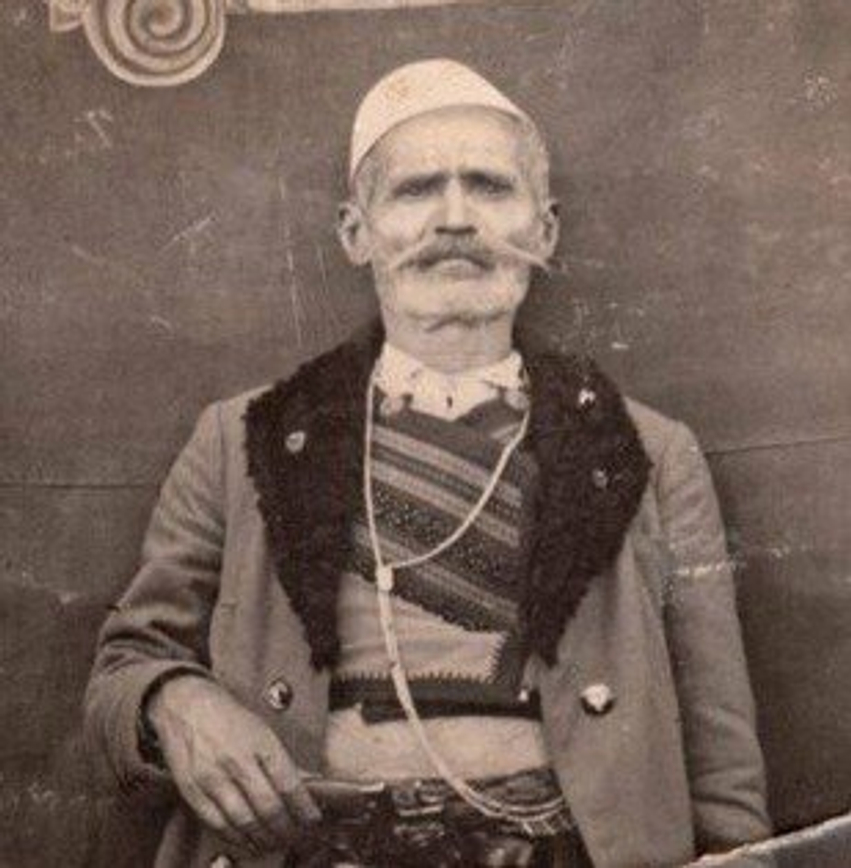
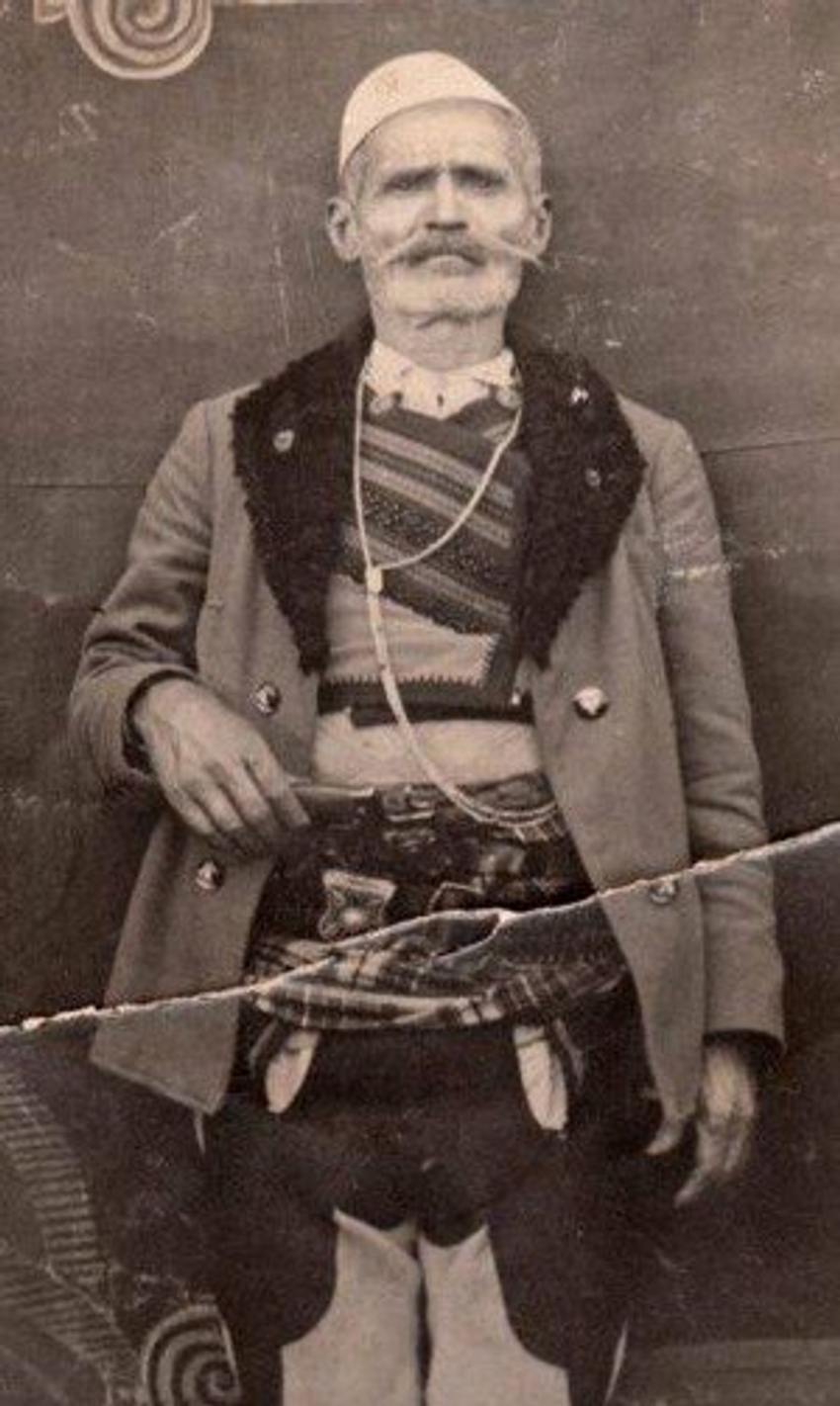
During the occupation, the Albanian was not punished because he had done wrong, but because he refused to submit. The Albanian, when his freedom is taken away, does not break - on the contrary, he rises. This is what happened with the escape of two Albanians - one from Hoti, the other from Kraja - from the infamous prison of Tivar. Where the walls did not only enclose bodies, but aimed to break souls. Where the walls were thick and hope was thin, Tomë Nikë Gojçaj known as Tomë Nika of Hoti and a Krajan, whose name I was unable to discover, did not lose hope. They knew that prison was not the end, but another test of character.
In Albanian history, there are moments when a person faces power and chooses to either break or rise. Hotiani and Krajani chose the latter. In the darkness of prison, they did not seek mercy, but fellow countrymen, because an Albanian in prison seeks a brother.
And fate brought them face to face. This is not only a story of bravery, but it is a story of dignity and trust in others, which was told to me by the exile from Hotin, Shtjefën Gojçaj, who lives in Michigan-Detroit.
Hoti and Kraja in a cell
In the dark cells of the Tivar prison, Toma saw many prisoners, but he persistently searched for any Albanian from Shkodra or the surrounding area. There he met a villager from Kraja. Two men, two regions, one destiny came together. Hoti and Kraja met in a cell. Not as Albanian provinces, but as Albanian consciences. This was not simply a chance meeting. It was a union of two provinces that shared the same ideal: freedom. Without previous acquaintance, without personal interests. Just one sentence was enough: “I intend to leave”. The answer came as an oath: “I am ready to come with you. But how”?
When Toma learned that the mother from Krajan was feeding her son and that they had sheep, he ordered: "Tell the mother to make very thick yogurt. Put a piece of string without a tail inside the yogurt, so that it doesn't look like there is something hidden." That was enough. This is the Albanian besa, a moral agreement that cannot be broken, one of the most important pillars of our national ethics and tradition. Breaking it was considered the greatest moral shame in traditional Albanian society.
The country mother - the silent heroine
The escape plan relied on a figure rarely mentioned in official chronicles: the mother of the prisoner, who does not carry a weapon, but carries the world on her shoulders. She agreed to risk her life for her son and for a man she had never seen. But she knew that he was Albanian. In a bowl of thick yogurt, she hid the file with which to cut the bars. The brave and manly mother of the prisoner passed through the control of the prison guards, but they found nothing suspicious and handed over the means of escape to her son.
The Albanian mother, in times of occupation, is not just a mother. She is a pillar of resistance, she is national consciousness, she is a symbol, she is the moral heart of the nation, without noise, without glory, without flags, without songs. Only with sacrifice.
Escape plan
With the tool in hand, Toma said to his neighbor: "We'll use this file to cut the iron."
Krajani stepped forward: "We are at a great height. If we jump, we will be shattered into pieces on the limestone rocks."
He explained the plan to him with military calm: "When the guards come, there will be two of them. One will be bigger, and the other smaller. I will jump on the bigger one, you on the smaller one. When you knock him down, I will snap (break) his neck."
They waited for the right moment. When the guards were lighting cigarettes, Toma signaled to the fellow. From the second floor they jumped simultaneously. Toma, physically stronger, broke the neck of the first guard. But when he turned, he saw the other guard strangling the fellow with his nails in his throat. With a second jump, just as fast and precise, Toma jumped on the other guard and saved the fellow.
Escaping through thorny rocks
After they escaped the prison guard, they sawed through the iron bars. They blasted them open and climbed up a mountain ridge, through wild terrain with razor-sharp rocks and wild thorns. The other guards were alerted, sprung into action, and gave chase, firing relentlessly. Bullets whistled around them, as their feet crunched on rocks and their bodies scraped against the bushes. They left behind blood and flesh in the bushes, but they managed to escape. They didn’t just escape prison. They escaped from humiliation into dignity.
Besa of Krajë
Finally they arrived at the villager's house, where they hid with great care. Wounded and exhausted, when Hotina and Krajan arrived in Kraja, the residents did not welcome them as fugitives, but as sons. They gave them food, clothes, cleaned their bloody bodies, their wounds and spared nothing. After Toma had regained some strength from fatigue, he asked the villagers to show him the way to Hot, which he did not know. Even though he was being pursued by two enemy armies, Turkish and Montenegrin, and by an Albanian family, he did not want to put them in danger. However, they accompanied him to the other side of Lake Shkodra. The solidarity of this village turned into a human shield. No one asked about the consequences, no one retreated. Here the community spoke louder than fear.
Crossing the lake - a collective oath for life or death
The decision of the villagers to accompany Toma across Lake Shkodra was the moral and emotional climax of this story: "Either we all cross, or we all die."
This sentence summarizes the philosophy of Albanian survival: the individual is not left alone, fate is shared together. This was not simply a geographical passage, it was a rite of dedication. This is the code of our historical survival.
The path of loneliness
At parting, the men embraced. The Krajans returned to their homes without consequences. Toma set off for Hot, wounded, hungry, hiding the entire journey because he was pursued by the Ottomans, the Serbs, the prison administration and his enemies.
Exhausted by wounds and hunger, he carried with him the last gift from his countrymen: a little food, salt, and a knife so that, if necessary, he could slaughter some livestock, cook it, and survive. A story that proves that, even in the darkest times, faith, courage, and human solidarity can become bridges of salvation.
Message for today
This story is not just about yesterday. It speaks to us today. It reminds us that Albanians did not become a nation with speeches, but with sacrifices. Not with declarations, but with wounds. Not with privileges, but with faith. Two men - a Hotian and a Krajan - without an army, without a state, without international support, challenged prison, empires and fear. They left us a moral testament: that freedom is not given, that brotherhood is not negotiated, that the nation survives only when people are ready to risk for each other.
And whenever we talk about freedom, we must remember these two men. They showed us that the homeland begins where one Albanian decides not to leave another alone.


