

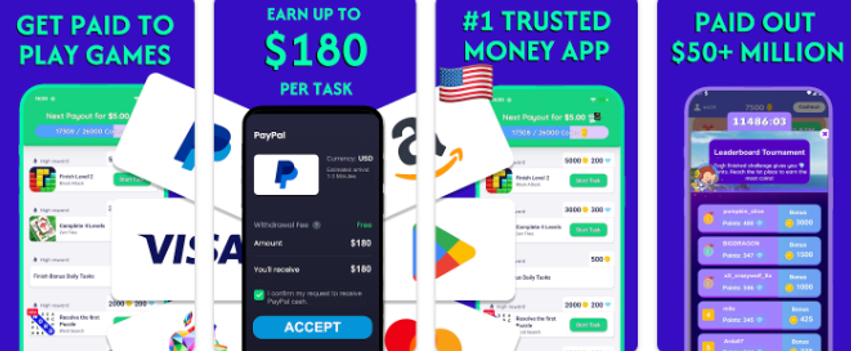
Short answer: yes. TesterMax is a real rewards platform, with a business model that makes obvious sense once you know where the money comes from. That last part is what most people are actually asking about when they type the question, so it is worth explaining properly.
"Legit" is a vague word doing a lot of work. It usually means something more specific: will this app pay me, is the offer real, and is there a trick I have not spotted yet. Anyone who has searched for an online earning game without investment has met enough noise to justify asking. The good news is that legitimacy in this category is genuinely checkable — there are five or six things worth looking at, and they take about ten minutes.
Where the money comes from
This is the question that settles most of it, and almost nobody asks it.
Getting a real person to install an app, register, and use a feature is one of the most expensive things a developer does. Games spend heavily to find players who will actually reach level ten rather than uninstall on day one. Companies pay for genuine feedback from genuine users, because internal testing tells them nothing about how a stranger behaves.
Rewards platforms sit in the middle of that. The developer pays for a completed action; the platform passes a share to the person who completed it. That is the whole arrangement. It is the same economics that explains why a paid product tester gets paid at all — the feedback is worth money to somebody, so somebody funds it.
Understanding this also tells you what to be suspicious of elsewhere. An app that cannot explain who is paying, or that promises returns wildly out of proportion to the action requested, has a problem in its model rather than its marketing. TesterMax's model is ordinary and visible: real tasks with real advertisers behind them.
It also explains the shape of the tasks themselves, which puzzles people at first. Why would anyone pay you to reach level twelve of a puzzle game? Because a player who reaches level twelve has demonstrably not uninstalled, and that is precisely the signal the developer bought. Why pay for a signup and a single feature? Because that is the exact stretch of the experience where new users disappear, and watching real people cross it is worth more than any amount of internal discussion about it.
Once the tasks stop looking arbitrary and start looking like the specific things a developer would pay to observe, the whole arrangement reads differently.
The checks worth running on any rewards app
Run these on anything in this category. TesterMax's answers are noted under each.
Is it published on the official app stores?
Both Apple and Google run review processes and remove apps that break their rules, which is not a guarantee of quality but is a meaningful filter. Anything asking you to sideload an APK from a link has skipped that filter deliberately. TesterMax is available on iOS and Android through the official stores.
Are the conditions stated before you start?
This is the strongest single indicator. A legitimate task tells you what it wants in advance: install this app and sign up, try this feature, reach this level, complete this survey. A dubious one keeps the requirement vague so it can be reinterpreted later. Every TesterMax task carries its goal in writing before you commit any time to it.
Is there a payout wall?
Payout minimums are where good intentions go to die — you earn something real, watch it sit on screen, and cannot touch it until the balance reaches a figure chosen by someone else. TesterMax has no minimum payout. What you have earned is what you can withdraw, from the first task onward.
This is worth weighting heavily when you assess anything in this category. A high threshold is not fraud, but it quietly transfers risk onto you: leave early and you forfeit everything you built. Removing it puts the platform and the user on the same side of the arrangement, which is usually a good sign about how the rest of it is designed.
Are the payout destinations mainstream and named?
Vague promises of "rewards" are a warning sign; a published list of real destinations is not. Coins convert into cash through PayPal or Venmo, into game credit, or into gift cards for Amazon, Google Play, Apple, Steam, Roblox, Netflix, Spotify, PlayStation, Xbox, Cash App, DoorDash, Starbucks, Target, Uber Eats, Walmart and Visa. Those are companies with reputations to protect and processes that can be checked.
Does it ask for anything it should not?
A rewards platform has no reason to want payment from you, banking credentials, or a purchase before you can start. Tasks on TesterMax cost nothing to take. If any app in this category asks you to spend money to begin earning, that is the moment to close it.
Does the range of tasks make sense?
Legitimate platforms offer work that somebody plausibly wants doing. Games with milestones, app testing, surveys, video and ad tasks, product testing, one-off jobs — all of these have identifiable buyers. Alongside them sits a bonus layer that rewards regularity: daily, weekly and monthly bonus tasks, a welcome bonus for new accounts, level and achievement bonuses, a daily check-in streak with a multiplier that grows the longer it runs, and referrals.
What "legit" does not promise
Worth separating two things that often get confused. Legitimate means the platform does what it says: tasks credit, balances convert, money leaves. It does not mean any particular figure lands in your account, and no honest article can quote you one, because it depends entirely on which tasks you take and how much time you have.
That distinction is where most disappointed reviews of this whole category come from. Someone expected a wage, got pocket money, and called it a scam. The app was working correctly; the expectation was not.
Set it properly and the picture is a good one. Small amounts of otherwise idle time turn into a PayPal payout or a gift card for something you were going to buy anyway, and there is nothing standing between you and the balance you built.
The verdict
TesterMax is legitimate by every test that matters. It is distributed through the official app stores, it states each task's condition before you begin, the money behind it comes from a normal and explicable place, its payout destinations are named and mainstream, it asks nothing of you financially, and it holds none of your earnings behind a minimum.
Run those same checks on anything else you are considering. Most questions of the "is this real" variety answer themselves within ten minutes once you know what to look at, and the habit is worth more than any single verdict — including this one.
Here, though, the verdict is straightforward. Install it, read a task, complete it, and you will have tested the whole claim yourself before the afternoon is out. That is a rather better standard of proof than anything an article can offer, and it is available to you at no cost beyond the time.


